
Satyam Khanna

About Satyam Khanna
Posts by Satyam Khanna:





5 things that you cannot ignore as a parent who plans for pre-departure for their kids going overseas in 2021
As we approach the month of August & September, most kids have identified their one way flights & perhaps booked tickets too, parents at this time are busy preparing list of essential and non essential items, irrespective of the flight time, airlines have weight restrictions for both check-in and carry-on bags, still it is unlikely that purchases are made considering weight of any item, for many of you this may be the first time that your child will be pursuing his/her studies overseas, every one is a bit tensed, if not on how the child will secure good grades but certainly on what they should carry with them to their dorm room, pre-departure planning can be overwhelming for many parents, at times there are some very basic questions which become the cause for concern, for instance how the kid will safely commute when the threat of Delta Variant is still looming. With proper pre-departure planning the family can avoid unnecessary anxiety. Here are 5 essential things you should consider which will be different from previous years of pre-departure planning.
- Complete Health Checkup – This year before your kid boards the flight, parents ought to go the extra mile to ensure their kids are healthy in every aspect, from head to toe, developing strength and immunity will be the utmost priority in this year’s per-departure planning, this was not much of a concern before 2019, to start with, getting a full body check up, filling up deficiency gaps via proper nutrition, developing schedules to correct circadian (sleep) cycle, keeping a strong check on being under or over weight would constitute most priority under your pre-departure planning this year, it simply would be a complete waste of all efforts towards admission, if the child were to recklessly party and contract COVID or are sick due to not practising healthy habits and they are not allowed to board a flight, in spite of the fact that there are no restriction in immigration and flying.
- In-Flight Precaution Planning – Prevention is better than cure, aircraft’s are large cabins with no possibility of outside air ventilation, chances are that your kid will travel in a fully booked flight, flight duration may range from 8-16 hours, getting a handful and the most appropriate masks, such as N95, or the ones which do not defog/build up heat and also which do not build up unnecessary itching or scratching should be your priority time to purchase, remember that economy class seats are placed much closer to each other than their premium counterparts! Even if there is a 5% chance which enhances precaution during the flight, then spending that extra thousand US dollars for a premium seat won’t be a bad idea! After all its a one way flight for your kid in this trip.
- Getting a head start before commencing your first semester – Entire 2020 was virtual from schools to colleges to universities across the globe, till date your child has undergone schooling where-in physical tutoring and one-on-one interaction has been the standard process for them to learn, it would be a smart idea for kids to have a look at the syllabus of their enrolled classes (US kids would already be enrolled in their first semester class in their respective universities), completing even 10% or 3 weeks of study would get kids the advantage to match the pace of their college classes even if they were to be conducted virtually.
- Getting Rid of Communication Gaps – The more your child is distantly placed from you the more difficult it becomes to be in constant touch with them, even for kids to give you regular update becomes a point of concern for them, they are subjected to fast learning paced learning, if unorganized then they lack behind, utilizing your time in clearing your doubts as to how they will communicate with you should be part of your pre-departure planning process rather than you spending most of your time shopping for items that you think they need, one-on-one session with your kids in explaining your expectation and also understanding their view on their education journey will help you build faster communication with them, having lengths of talks is not as important as having agile, to the point and meaningful conversations!
- Designing Local Support System – After 12th class or when your child crosses 18 years of age, your child is considered to be an adult in many countries, but that does not imply that they are very well versed with the law of the land, similarly when kids try to adjust to foreign culture and system, they need help, especially for those kids who by their nature are reserved and introvert, they may not express much, hence having a local guardian or just making friends with parents of other kids who are attending the same college will keep your well informed and up to date on activities which might require your help and attention. Keeping in touch with you education consultant from time to time will also solve a lot of queries that might build up over the period of time.
Satyam Khanna

Why your educational plan is incomplete without Information Technology courses!
A recent article in wall street journal stated that during covid-19 American household income increased overall, especially the top 1% did excellent in increasing their wealth, people at large invested in shares of listed companies via their smartphones, all across the world, IT stock prices did better than others, they had to do, as people became isolated, technology was their daily help! India saw many stock broking apps popping up in Play store and App store with options to even invest overseas, during COVID acceptance rate of online – Minerva Institute in San Fransisco was lower than 1%, even IVY’s could not match this number. Reliance Industries chairman once stated that the internet is future oil. So how actually does all this relate to your education and career? You see, as the world is moving forward, IT & its application is present everywhere, it is no more a question or an option to not be equipped with Information technology knowledge, the very reason you are reading this article is because you have internet and a smart phone or a computer.
Don’t be alarmed, your career assessment might have concluded that you will do excellent in Arts, psychology, mechanical engineering or you are born to be a doctor, but IT is part of your daily routine, there is no avoiding it no matter what, it certainly would be a smart move to take a few courses about Information Technology or subjects related to social media as you move along your educational journey, you may wonder – I honestly don’t need to learn or take a class in order to operate my facebook account, well you are absolutely correct, you will either do a job or aim to become an entrepreneur, irrespective of which path you walk down upon, there will be a time when you will look towards building your online presence on LinkedIn, you perhaps already are highly proficient in operating your facebook, snapchat & Instagram accounts, some of you might have already spoken in your Clubhouse chat room already. Today you can be handpicked & offered a lucrative job by any multinational company if you have an interesting digital footprint, hence if your are one of those who is stepping in higher education during the pandemic, you certainly would want to keep a few IT based courses in your career & educational plan, these courses can help you build your accurate profile and then there is always a good opportunity to generate money from this industry too!
So where do you start and how? simple – start taking courses online whenever you are ready, perhaps right after reading this article? don’t wait for the industry to proliferate and build its own momentum, as this one gallops like none other, another important factor in deciding which IT course to opt for? try to not plan for something fancy, for example – Don’t start by enrolling in a courses which is titled – “Developing Cryptocurrency using Blockchain technology”, instead start with something simple, learn how to efficiently use social media platform, or just simply learn how to most accurately find information on google and perhaps how to fact check? take training courses offered by platforms which are part of your daily life. Look out for summer programs and camps such as ID Tech camps in US! Take courses available online free of cost by universities, if you like a particular topic or concept just opt for a free course, coursera, edx & udemy are excellent recourses to learn.
Satyam Khanna

The Way Teenager’s Think Today!
If you have a child at your home who is between the age of 8 to 23 years then you must read on. These are the children who have a very specific thought process. Let us look at some of the statistics on these children, these teenagers will comprise about 30% of the global workforce by the year 2030, it won’t come as a surprise to you that 98% of these teenagers will own a smartphone today. A Study estimates that generation Z (kids aged between 8-23) currently has a buying power of about 44 billion US dollars They also have the power to influence an additional 600 billion US dollars in spending by their parents.
If 98% of these children will have smart phones then it won’t come as a surprise that it is highly likely that you will find them glued to their smartphones. These are also the children who do not wish to take risks, it is also estimated that the attention span that these teenagers have is about eight seconds, that is how long they take to decide if something is worth their time or not, so if you are a parent and you feel that your child does not listen to you then this could be one of the reasons for the same.
Only about 34% of these teenagers feel confident and about 42% consider themselves to be happy, clearly this seems to be a huge amount of stress or strain, it can also mean that their life has some issues (which you may think it is nothing, but to them it is a lot) which does not allow them to be happy. In fact 46% of these teenagers feel distressed if they can’t use their smart phone for half an hour or less. So as a parent you must try to understand that smart phones are a natural extension to these Teenagers, but this does not mean they need to get addicted to it.
What about their activities apart from academics? these teenagers show a high tendency of staying in hotels when travelling, 92% of these teenagers are obsessed with cars, they plan to own a car (and a pricy one) in the future, amazingly 72% are willing to go without social media for a year if they could behind the sporty wheel, 53% of teenage girls which are females express sadness, almost all the time as compared to 42% in males. If we were to look into the studies which show the most anxious teenagers, then the US the UK and the Filipino teenagers would top the chart. Denmark and Netherlands have the least stressed teenagers.
In terms of patience, it is estimated that 60% of these teenagers when on a telephonic conversation, they are likely to hang up the phone, if a business does not answer their query in 45 seconds as compared to their previous generation. It is also estimated that today’s teenagers have very low empathy and understanding, not only with regards to their family situations, relationships but also about the consequences of their choices, cause they make decisions in such hurry. These teenagers also show a tendency that they will buy from certain brands only, the study concluded that a 60% of today’s teenagers will buy from brands who provide loyalty programs, in fact 74% of these teenagers have a loyalty program membership in the retail industry, so you as a parent you should not be surprised if you find your credit card bill to carry specific brand purchases over the period of time. 42% of these teenagers look for cashback and about the same percentage would like to receive free products as well.
When it comes to buying food, most will not even look at the price, also this generation kids, they are very particular about aesthetics of any product when they are deciding to make a purchase, 70% of these teenagers believe that fashionable design matters than any other generation, and it is estimated that by 2040 that all their purchases would be done online.
Let us talk about video gaming for a moment, 44% of today’s teenager aim that they will use 5G to play more games and about 65% of these teenagers do not have a day which goes without texting anybody. These kids are also influenced very easily, it is estimated that 46% of these teenagers follow at least 10 influencers on social media, so if your child is influenced by let’s say somebody in their friend circle then you as a parent should not be surprised about it. However about 68% of these teenagers would like to read, get evidence to purchase (reviews) or to change their opinion on a given topic, so as a parent rather than explaining them and refuting with them, it would be smart to share a link with them, as you read earlier, that you are only getting 8 seconds of their attention. About 90% of these teenagers use Snapchat, so it’s not a bad idea to generate a login on this app, this will train you as a parent to actually understand how they communicate pictorially, Also if there is a topic of their interest then surprisingly 51% of these teenagers would prefer a face-to-face conversation as compare to a virtual one. These teenagers also watch 2 times more videos on mobile devices, it can be from YouTube or any video streaming social media application or website than any other generation existing today, so to communicate with them on certain topics (which puts them off) it would be smart for a parent to make a YouTube video or simply a video on their mobile and send it to them, these are also the kids who do not like advertisements, about 81% of them skip ads and 51% use ad blockers. Let us look into the data with regards to current teenagers and their thought process regarding money, these kids expect about $60,000 a year in their first job. About 40% of today’s teenagers worry about finding employment however about 37% think people receive more than one job offer, these are the kids who can get bored very easily, hence about 55% of them do not plan to work on a given job for more than three years and if they were to find a job about 63% believe that they would take a job if the same is referred to them via a friend.
In a nutshell the current teenagers can be summed up as kids who can get influenced easily are highly fashionable, creative and innovative however are very impatient but money driven.
Sources – Cognizant, Deloitte, Robert Half via Inc, LinkedIn, Yello, Adrenalin, GCK, Accenture, Crowdtwist
Satyam Khanna
Top 6 tips for Parents to help their child prepare for Boards!
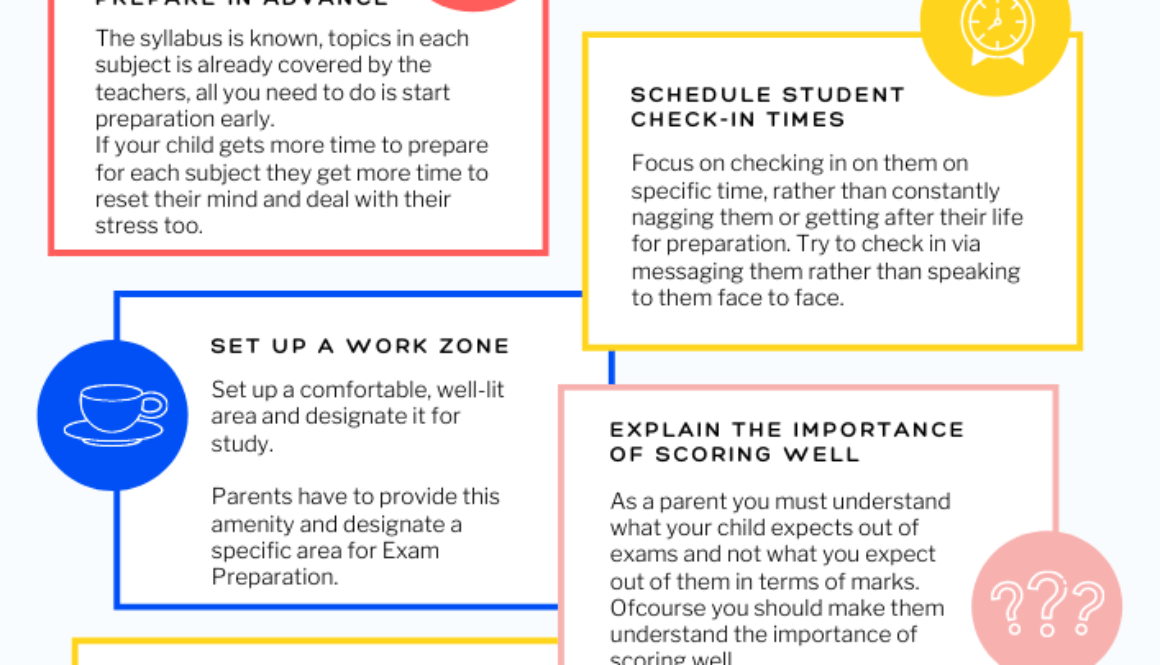
Board exams bring with them a lot of fear and anxiety not only to kids but to their parents as well! Below are 6 tips for PARENTS to help their child navigate the Board exam preparation process.
- PREPARE IN ADVANCE: The syllabus is known, topics in each subject is already covered by the teachers, all you need to do is start preparation early.If your child gets more time to prepare for each subject they get more time to reset their mind and deal with their stress too.
- SCHEDULE CHECK IN TIME: Focus on checking in on them on specific time, rather than constantly nagging them or getting after their life for preparation. Try to check in via messaging them rather than speaking to them face to face.
- SET UP PREP ZONE: Set up a comfortable, well-lit area and designate it for study. Parents have to provide this amenity and designate a specific area for Exam Preparation.
- EXPLAIN THE IMPORTANCE OF SCORING WELL: As a parent you must understand what your child expects out of exams and not what you expect out of them in terms of marks. Of course you should make them understand the importance of scoring well.
- GIVE THEM THEIR “ME” TIME: Exam preparation, especially for Board can be overwhelming. Many kids reset their mind by being on their MOBILE phones, grounding them totally for using their devices can stress them out too. Ensure they get their “ME” time too.
- TALK TO YOUR CHILD: You kid might be coming under pressure for not being able to get their preparation book, get in touch with their tutor or perhaps they need video content to prepare. IDENTIFY and troubleshoot their content problem by talking to them often.
Satyam Khanna
Educational Consultant